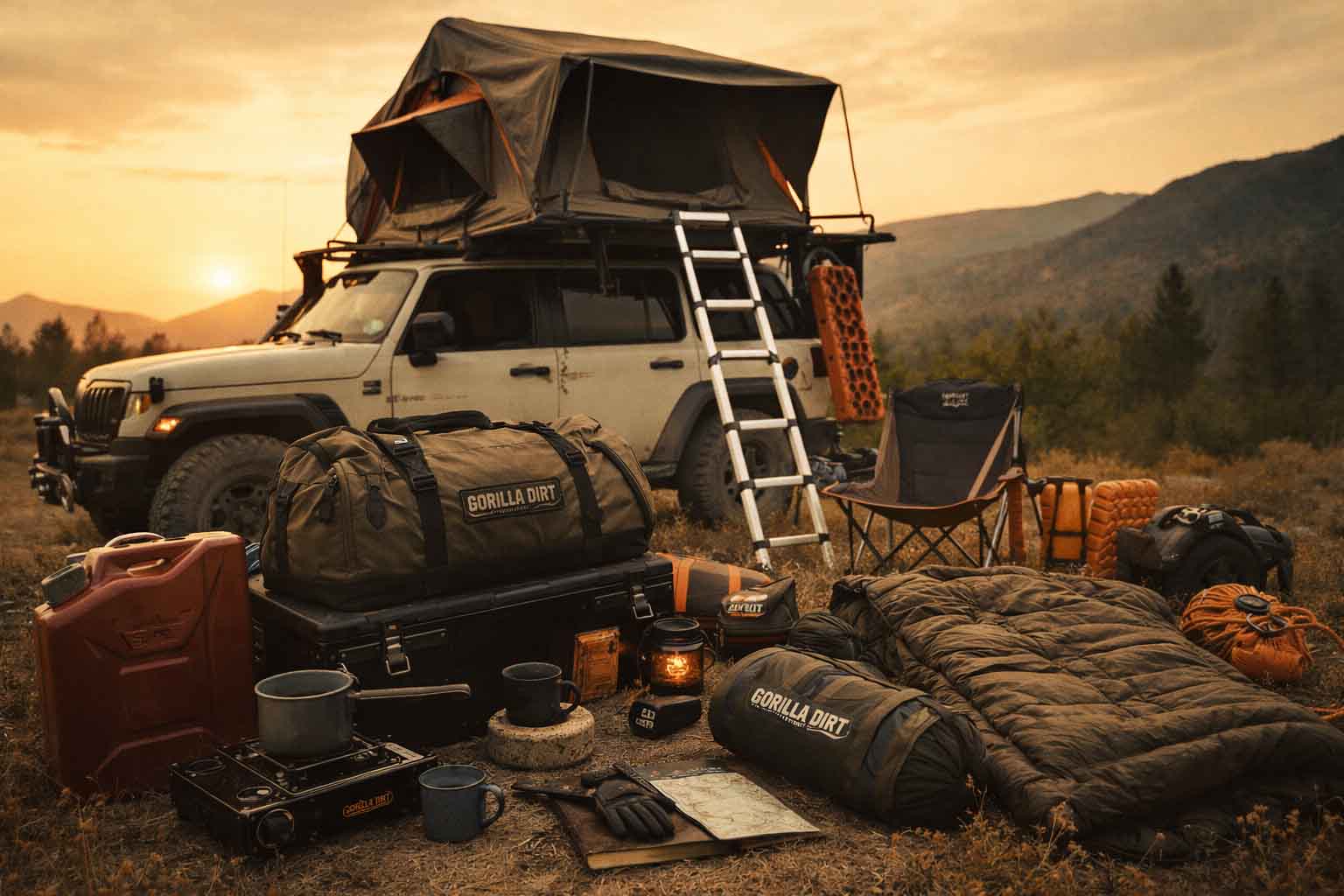
The best gear for a roof top tent setup includes a quality sleep system, weather-appropriate bedding, a camp pillow, a waterproof gear bag, a trail mat, lighting, and the right vehicle accessories. Getting the packing list right before your first night in an RTT means more sleep and less stress on the trail.
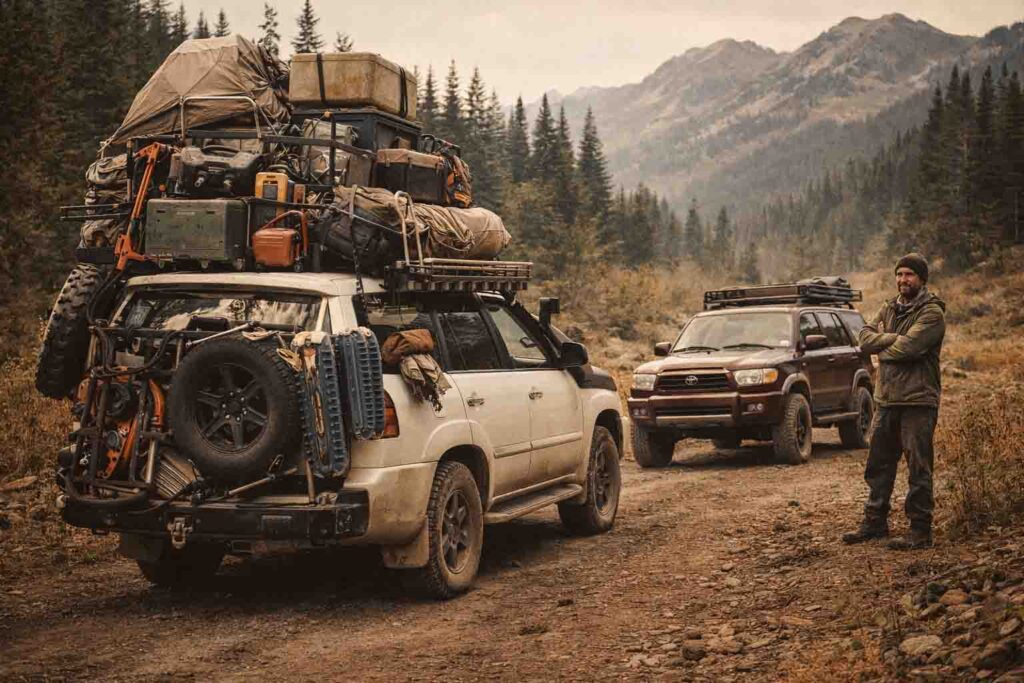
Roof top tents have changed the overlanding game. Instead of wrestling a ground tent in the dark after a long drive, you’re sleeping elevated above the dirt, bugs, and moisture — set up in minutes. But the tent itself is only part of the equation. What you pack into your rig and your RTT determines whether you wake up refreshed or regretful.
This is the complete roof top tent packing list — everything worth bringing, nothing you don’t need. We’ve organized it by category so you can build out your kit over time.
1. The Sleep System: Where Comfort Lives or Dies
Everything else on this list is secondary to your sleep setup. A bad night at 8,000 feet in a poorly rated sleeping bag ruins the whole trip. Get the sleep system dialed first.
Sleeping Bag or Overland Comforter
A sleeping bag rated for colder than you expect is the single most important call you’ll make. Desert nights drop fast. Mountain mornings hit hard. For true RTT comfort, many overlanders are switching to an overland comforter — essentially a full-sized puffy comforter designed for the outdoors. It’s far more comfortable than zipping yourself into a mummy bag when you’re sleeping with a partner, and it stuffs down well enough to live in the tent full-time.
- Sleeping bag (solo adventurers): choose a bag rated at least 10°F below the coldest temp you’ll encounter
- Overland comforter (couples or comfort seekers): a double-sized down or synthetic comforter made for outdoor use — leave it in the RTT between trips
- Liner: a silk or fleece sleeping bag liner adds warmth and keeps your bag cleaner
Camp Pillow
Don’t underestimate the pillow. Inflatable camp pillows pack small but often feel like sleeping on a balloon. A compressible full-size camp pillow — one that actually feels like a pillow — is worth the extra space in the RTT. It stays up there, so you’re not hauling it in and out.
Nano Puffy Blanket
A lightweight puffy blanket is one of the most versatile items in your RTT kit. Use it as extra warmth inside the tent, drape it over your shoulders at the campfire, throw it in the back seat for long drives. The best ones compress into their own pocket and weigh almost nothing — you forget they’re there until you need them.
2. Gear Storage: Keep It Organized and Protected
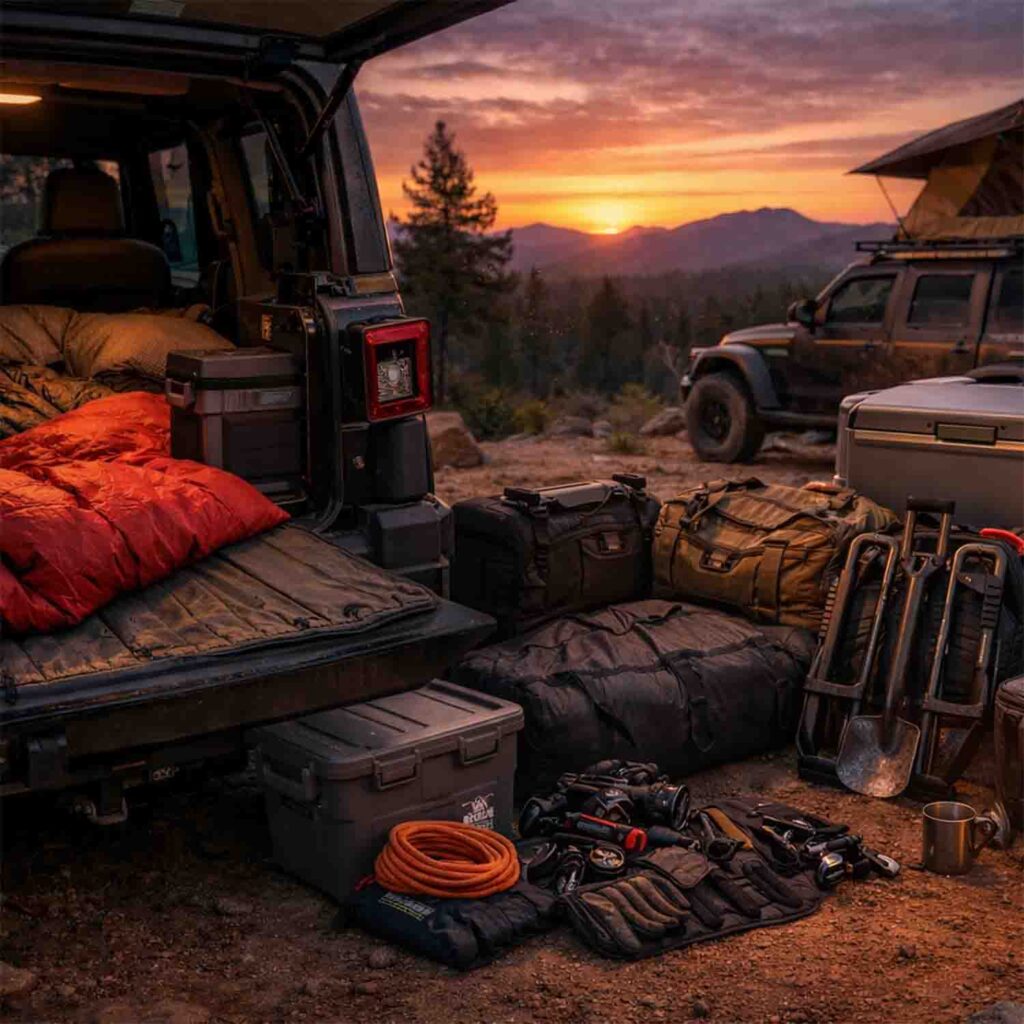
The rig gets dirty. Gear goes everywhere. The best RTT rigs we’ve seen treat storage as a system, not an afterthought. Everything has a home, and the right bag or container keeps your stuff dry, accessible, and intact.
A serious gear duffel is non-negotiable for RTT trips. You want something that survives being thrown in a truck bed, strapped to a roof rack, dragged through mud, and exposed to rain. Look for: sealed seams, waterproof shell material, glove-friendly zipper pulls, and enough volume to handle a weekend’s worth of gear. A 40L handles weekend trips comfortably; a 60L is the move for week-long expeditions.
Molle-style loops on the outside let you attach smaller pouches, recovery gear, and accessories without opening the main bag.
Pack electronics, clothing layers, and anything moisture-sensitive in dry bags. Even a waterproof duffel isn’t fully submersion-proof — a dry bag inside your duffel is true waterproof insurance.
Quality tie-down straps keep your duffel, camp chairs, awning, and recovery gear secure on the roof rack and in the bed. Pack extras — you’ll use them for something unexpected.
3. Camp Comfort: Make the Campsite Feel Like Home
A ground-level mat under your RTT ladder and at the campsite entry does a lot of work: it keeps dirt and mud out of the tent, defines your camp footprint, and doubles as a utility surface for gear staging. Go with something that’s durable, easy to hose off, and compact enough to strap to the rig.
Awning
A roof-mounted awning turns any flat patch of desert into a livable campsite. It creates shade during the day, keeps rain off your cooking area, and serves as a gathering point at night. Once you camp under an awning, it’s hard to go back.
Camp Chair + Table
A low-profile camp chair that folds flat is worth its weight. Pair it with a lightweight camp table and you have a real base. Skip the bulky furniture setups — packability beats luxury on RTT trips where every inch of rig space matters.
Lighting
A string of LED camp lights hung under your awning transforms the vibe at night. Add a quality headlamp (stored where you can reach it from your sleeping bag) and a lantern for the camp table. Light is cheap insurance against fumbling around in the dark.
4. Clothing & Personal Gear: Layer for the Unexpected
Weather changes fast in the backcountry. The overlanding approach to clothing is simple: layer up, stay functional, don’t overpack on style.
- Base layers (moisture-wicking): the foundation for any temperature range
- Mid layer (fleece or light down): the one you’ll reach for most at dusk and dawn
- Outer shell (wind/waterproof): keeps the elements out without trapping heat
- Hat or beanie: heat loss through the head is real — pack one you’ll actually wear
- Neck gaiter: one of the most underrated pieces of camp gear — warmth, sun protection, dust protection, all in one
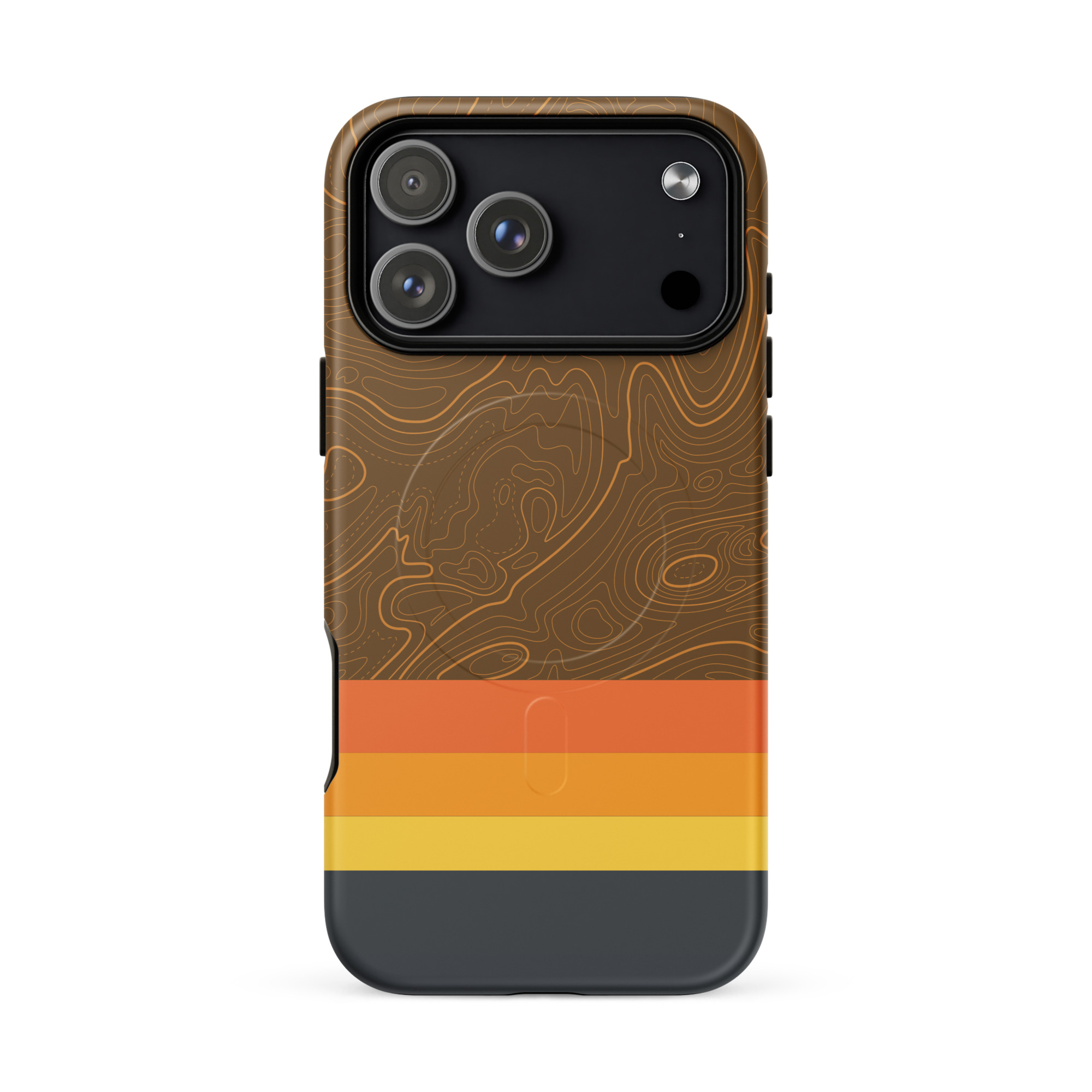
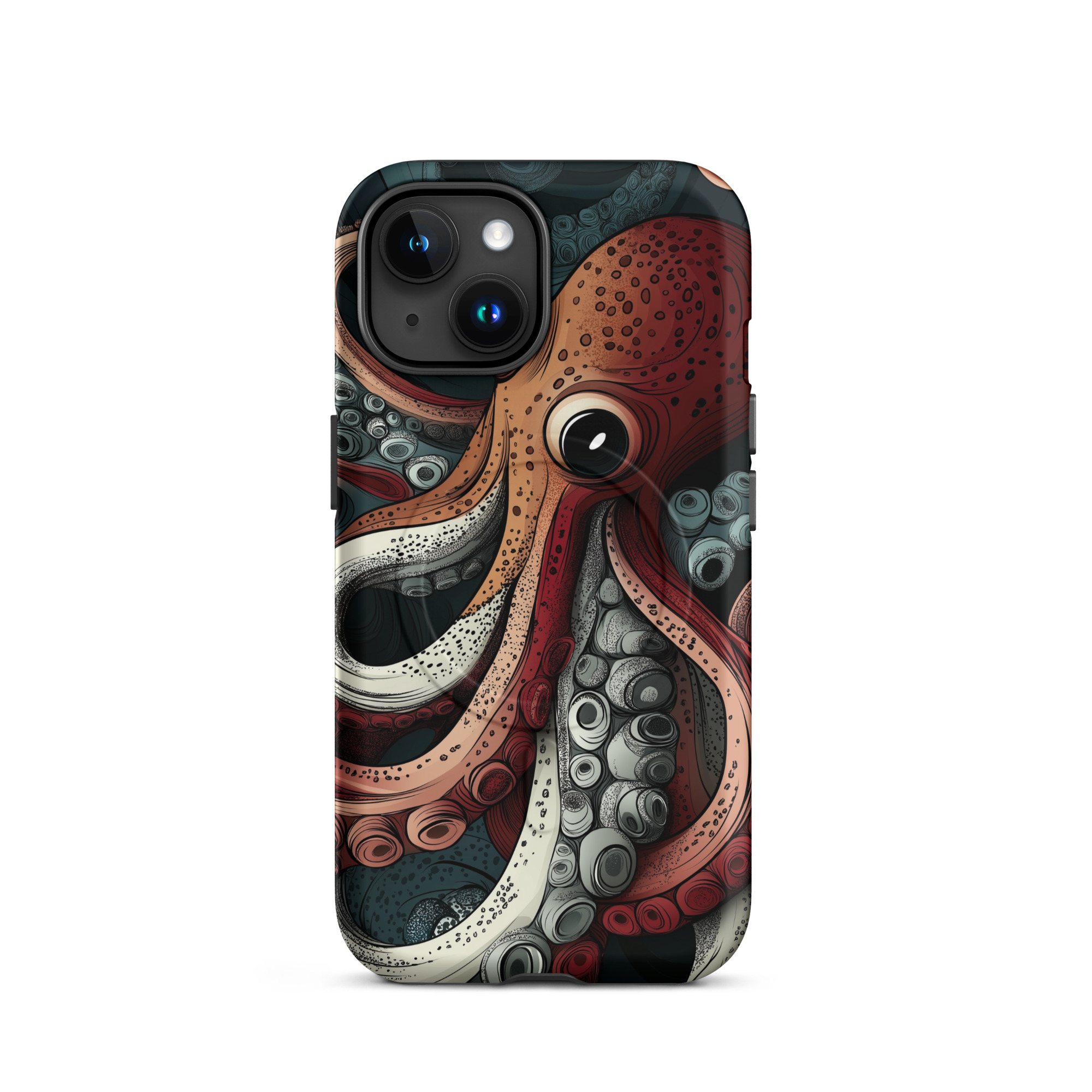
- Overland-rated phone case: your phone is your map, your communication device, and your camera — protect it
5. Camp Kitchen Essentials
The camp kitchen doesn’t need to be elaborate — it needs to be reliable. RTT rigs don’t have room for full camp kitchen setups unless you’re running a dedicated slide-out or tailgate setup.
- Camp stove (compact 2-burner or single-burner): propane or isobutane depending on elevation and temperature
- Campware set: a quality pot, pan, and utensil kit that nests together cleanly
- Knife: a field knife earns its place both in the kitchen and on the trail
- Coffee setup: non-negotiable — French press, AeroPress, or pour-over depending on how seriously you take your mornings
- Cooler: a quality cooler holds ice for days and is the backbone of every camp meal plan
6. Recovery & Safety Gear
This section isn’t optional. The more remote your camping, the more critical recovery gear becomes. You don’t need everything on this list for a front-country site — but for anything off pavement, take it seriously.
- Recovery boards (e.g. MaxTrax): the most reliable self-recovery tool for soft terrain
- Tow strap + shackles: for the times another rig needs to help — or you need theirs
- Portable air compressor: after airing down for the trail, you need to air back up for the road
- First aid kit: build your own or buy a comprehensive outdoor kit and know how to use it
- Satellite communicator (Garmin inReach or SPOT): for when you’re out of cell range and something goes wrong
The Complete RTT Packing List at a Glance
Sleep System
- Sleeping bag (rated for your expected low) or overland comforter
- Camp pillow (full-size compressible)
- Nano puffy blanket
- Sleeping bag liner
Storage & Hauling
- Gear duffel (40L or 60L depending on trip length)
- Dry bags for electronics and clothing
- Quality tie-down straps
Camp Comfort
- Trail mat (base of RTT ladder / camp entry)
- Awning (roof-mounted)
- Camp chair + lightweight table
- LED string lights + headlamp + lantern
Clothing
- Base layers, mid layer, outer shell
- Beanie and/or trail hat
- Neck gaiter
- Gloves for early mornings
Camp Kitchen
- Camp stove + fuel
- Campware set (pot, pan, utensils)
- Field knife
- Coffee setup
- Cooler + ice
Recovery & Safety
- Recovery boards
- Tow strap + shackles
- Portable air compressor
- First aid kit
- Satellite communicator
Frequently Asked Questions
What do you need for a roof top tent?
At a minimum: a sleeping bag or comforter rated for your expected temperatures, a camp pillow, some form of lighting, and a bag to carry your gear. Most RTT owners add an awning, a trail mat, and a gear duffel once they get the basics dialed.
Can you sleep in a roof top tent in cold weather?
Yes — RTTs are generally warmer than ground tents because you’re elevated above cold ground and the tent body retains heat well. The key is a properly rated sleeping bag or overland comforter. Many overlanders camp comfortably in RTTs down to 20°F with the right sleep system.
How do I keep my RTT organized?
The key is leaving your sleep kit in the tent full-time — pillow, comforter, and any light items can stay up there. Everything else goes in a designated bag or box in the rig. A gear duffel for clothing and personal items, dry bags for electronics, and a dedicated kitchen box keeps things clean and fast to set up.
What size duffel bag should I use for overlanding?
A 40L duffel handles weekend trips comfortably for one person. A 60L gives you room for 5–7 day trips or doubles as a family gear bag for shorter outings. Go with a waterproof design with sealed seams — normal duffels don’t survive truck bed and roof rack exposure long-term.
Is an awning worth it for a roof top tent setup?
Absolutely. An awning adds a covered outdoor living area to your campsite that protects from sun, rain, and light wind. Once you’ve cooked and eaten under an awning, going back to crouching next to your tent feels like a step backward. It’s one of the highest quality-of-life upgrades for any RTT setup.
Build Your Kit Over Time
You don’t need everything on this list before your first trip. Start with the sleep system and a good bag — the rest builds naturally after you spend a few nights out and figure out what you actually miss. The RTT itself is the biggest investment; the supporting kit fills in over seasons of use.
The Gorilla Dirt catalog was built around exactly this kind of setup — small-batch, tested gear designed for people who actually use it. From the Rover XP Duffel and Overland Comforter to the Trail Mat, Camp Pillow, and Nano Puffy Blanket, most of the kit in this list lives at gorilladirt.com.
Have a dirty day.