A Real-World Guide to Bringing What Matters (and Leaving the Junk)
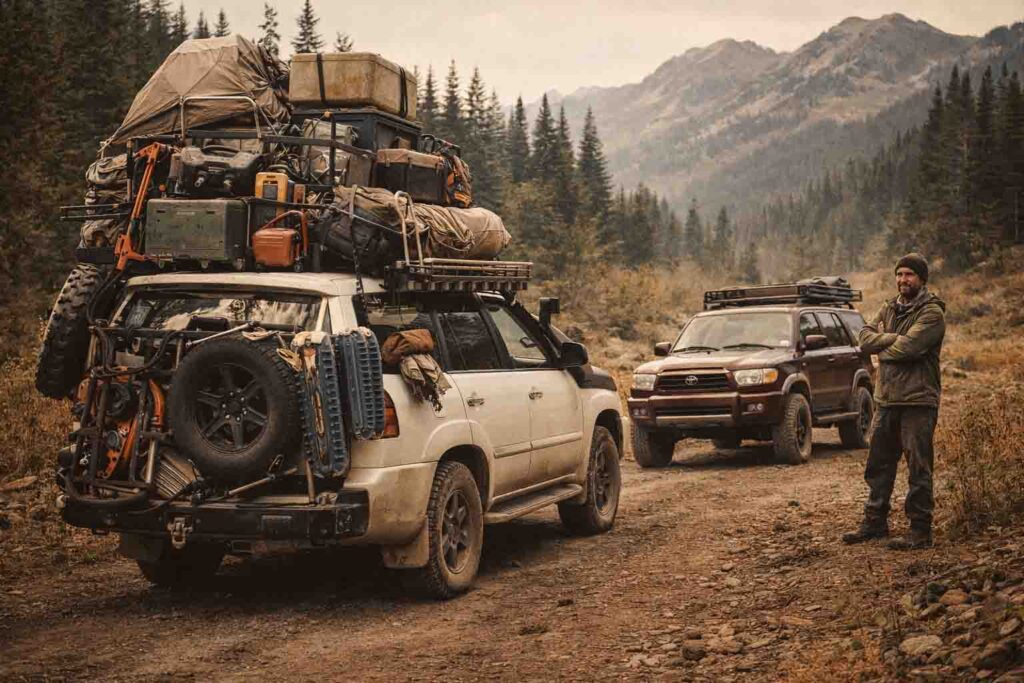
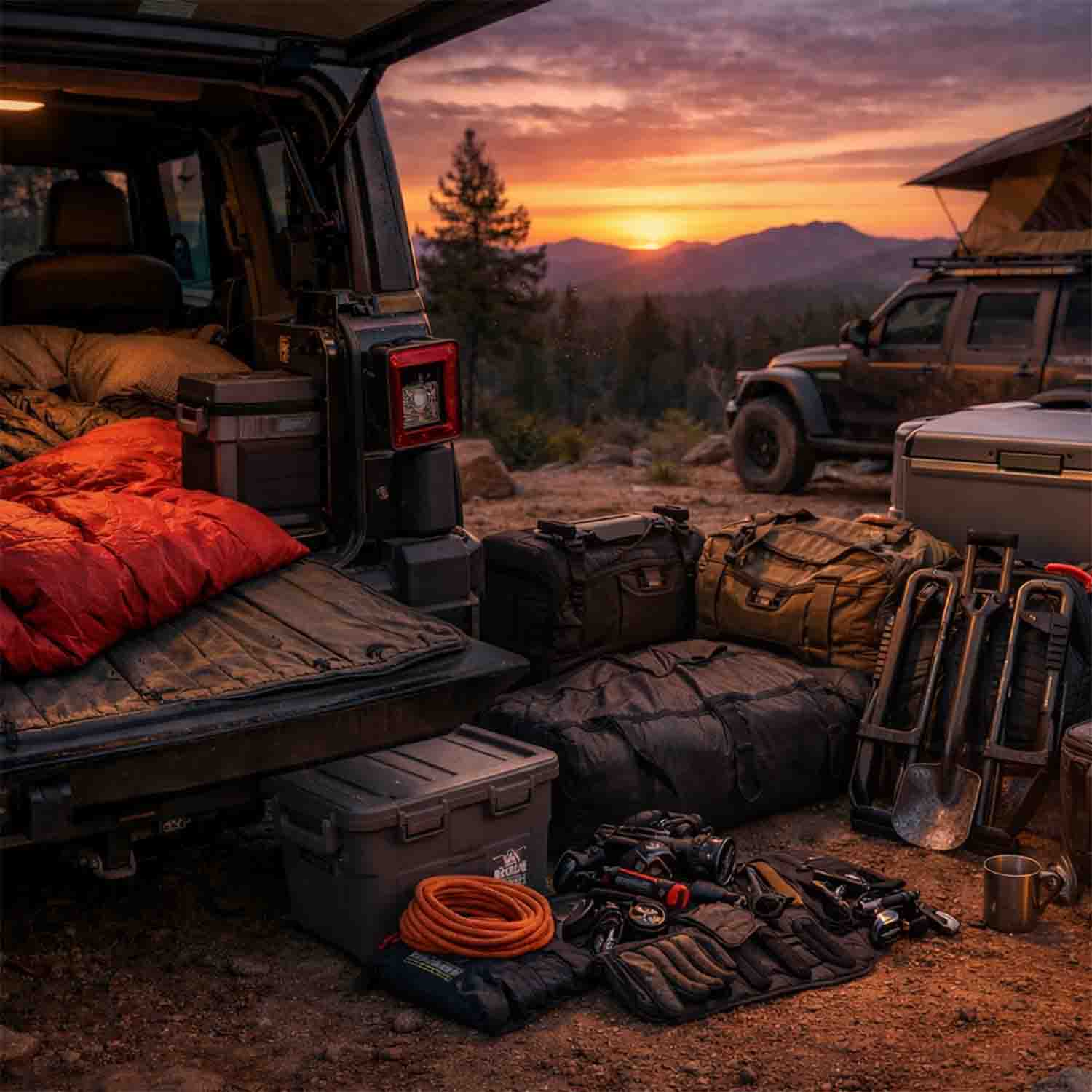
Packing for a weekend overland trip is not about cramming your rig until it squats like a tired mule. It is about bringing the right gear, in the right order, so you can enjoy the trail instead of digging through chaos like a raccoon with a headlamp.
This is not an Instagram packing list.
This is how real people pack for real dirt.
Whether you are driving a Tacoma, 4Runner, Gladiator, or something with questionable suspension noises, the principles stay the same.
Why Packing Matters More Than You Think
Overlanding is vehicle-based travel into places where stores are not close and tow trucks are farther.
Your packing system controls:
- Comfort
- Safety
- Speed
- Sanity
Bad packing means:
- You cannot find anything
- You forget important gear
- You waste daylight
- You swear more than usual
Good packing means:
✔ Camp setup takes minutes
✔ You know where things live
✔ You do not repack constantly
✔ You enjoy the trip
Step 1: Pack by Function, Not by Vibe
The biggest rookie mistake is packing by category instead of by use.
Do not pack:
“Kitchen stuff”
“Camping stuff”
“Random stuff”
Pack by function:
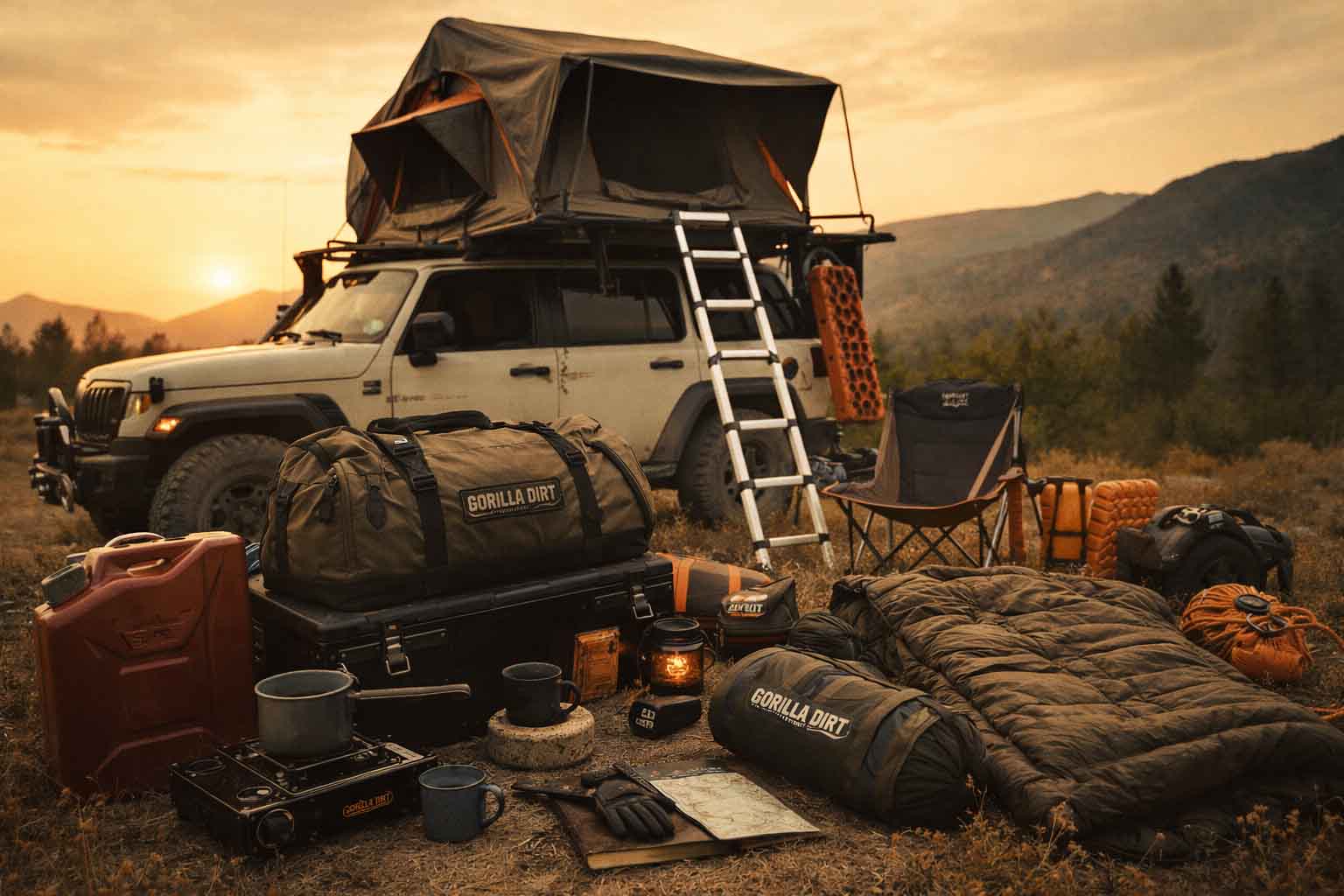
Core Packing Zones
- Sleep System
- Cooking & Food
- Clothing
- Recovery & Tools
- Personal & Tech
Everything you bring should belong to one of these zones.
If it does not… it probably does not need to come.
Step 2: Build Your Sleep System First
Your sleep system is the foundation of a good trip. If you sleep poorly, everything else feels harder.
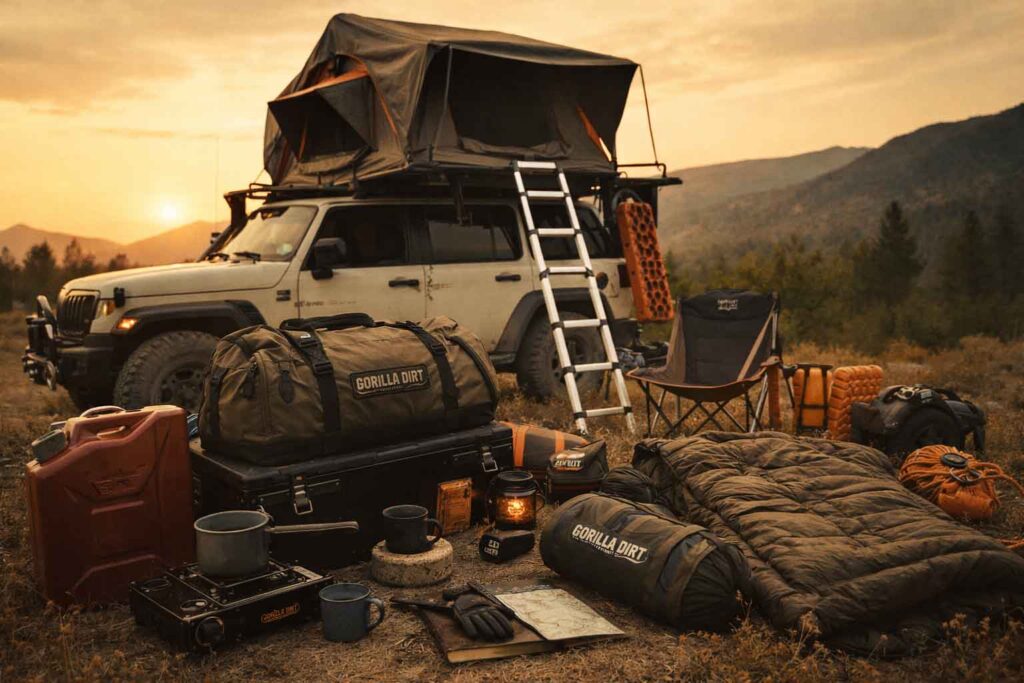
Weekend Overland Sleep Setup:
- Sleeping pad or mattress
- Pillow
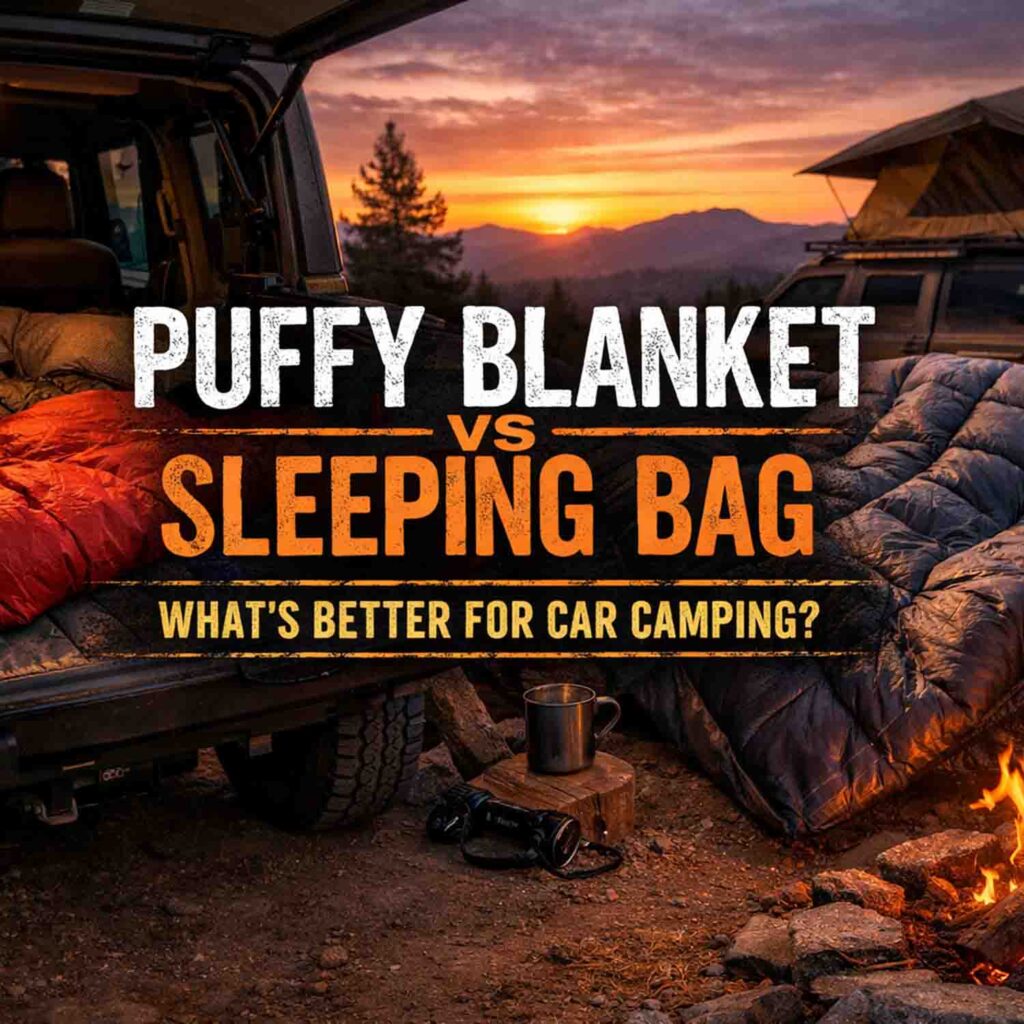
- Puffy blanket or sleeping bag
- Extra layer for cold nights
For most weekend trips:
A puffy blanket works better than a sleeping bag because:
✔ Easier to use in a vehicle
✔ Better for temperature control
✔ Works at camp and in the rig
✔ Packs smaller for short trips
- Cold weather?
- Bring a sleeping bag and layer a blanket over it.
- Pack your sleep gear together so you can:
- Open one bin
- Set up camp
- Be done
Step 3: Pack Cooking Gear as a Single System
Your kitchen should live as a unit.
Weekend Camp Kitchen Essentials:
- Camp stove
- Fuel
- Lighter
- Pan or pot
- Coffee system
- Cutting board
- Utensils
- Paper towels
- Trash bags
Food should be packed separately but stored near the kitchen kit.
Pro tip:
Pack one meal per container:
- Breakfast bin
- Dinner bin
- Snack bin
This keeps you from tearing apart the truck for one granola bar.
Step 4: Clothing = Layers, Not Outfits
Overlanding is not a fashion show. It is weather roulette.
Bring:
- One warm layer
- One rain layer
- One extra base layer
- One sleeping set
- Extra socks
Avoid:
- Multiple jackets
- Five shirts “just in case”
- Heavy cotton
- Fashion boots
You want clothing that:
✔ Packs small
✔ Dries fast
✔ Works dirty
✔ Layers easily
Put clothing in:
- Duffel
- Soft bag
- Packing cubes
Not loose grocery bags that explode every time you brake.
Step 5: Tools and Recovery Gear Get Their Own Zone
Your recovery gear should be:
- Accessible
- Secure
- Not buried under snacks
Core Weekend Recovery Kit:
- Shovel
- Tire inflator
- Tow strap
- Gloves
- Basic tool roll
- Duct tape
- Zip ties
This stuff does not belong in the bottom of the pile.
Put it:
- Near the tailgate
- Near the door
- In an exterior-access bin
If something goes wrong, you want hands on gear in seconds.
Step 6: Personal Items and Tech
This is the small stuff that ruins trips when forgotten.
Pack a personal kit:
- Headlamp
- Battery bank
- Med kit
- Sunscreen
- Bug spray
- Toilet paper
- Wet wipes
Phones, cameras, and GPS gear should live in:
- Protective cases
- One dedicated pouch
- One predictable location
If your tech floats around, it will disappear.
Step 7: Weight and Access Strategy
Heavy items go:
- Low
- Forward
- Secured
Light items go:
- High
- Rear
- Easy access
Daily-use gear should be:
- Near doors
- Near tailgate
- Near your hands
Never pack like this:
❌ “I’ll just stack it”
❌ “It’ll be fine”
❌ “I’ll remember where that is”
You will not.
Step 8: The One-Bin Rule
For weekend trips:
Try to limit yourself to:
- One sleep bin
- One kitchen bin
- One clothing bag
- One tool/recovery bin
- One food cooler
If your rig looks like a moving company truck, you packed emotionally instead of logically.
Step 9: Do a Dry Run
Before the trip:
- Pack everything
- Set up camp at home
- Cook one meal
- Lay out your sleep system
This reveals:
- What you forgot
- What you overpacked
- What you hate
Fix it before the dirt does.
Final Packing Philosophy
Overlanding is about movement, not clutter.
You want:
✔ Fast setup
✔ Fast breakdown
✔ Predictable storage
✔ Gear that works together
Good packing means:
- More trail
- Less digging
- Less stress
- More sitting by the fire
And that is the whole point.
Gorilla Dirt Packing Ethos
We design gear for:
- Vehicles
- Weekend trips
- Dirt roads
- Simple systems
Our duffels, blankets, and cases are built around:
- Easy access
- Tough materials
- No-nonsense use
Because your gear should help the trip… not become the trip.