
When the trail gets rough, your phone gets dropped. Rocks, mud, rooftop tent scrambles, dashboard vibration at 40 mph over washboard — here’s what actually matters in a phone case when the pavement ends.
Your phone isn’t just a phone out there. It’s your navigation when the GPS signal gets spotty, your recovery guide when things go sideways, your camera for every summit shot, your communication lifeline when you’re three hours from cell service. Lose it to a cracked screen or a water-killed motherboard and your trip — and potentially your safety — takes a serious hit.
Most phone case buying guides are written for people who drop their phone walking from the couch to the kitchen. This one’s written for people who bounce down rocky two-tracks, wade streams, run gear-loaded rooftop setups, and expect their equipment to work every single time.
Here’s what you actually need to know.
Why Most Phone Cases Fail Off-Road
The average phone case is designed for concrete and linoleum. It protects against the single most common civilian drop scenario: face-down from pocket height onto a flat floor. That’s fine for 90% of the population.
Overlanders don’t live in that 90%. You’re dealing with a completely different threat environment:
- Rock impacts from unexpected drops during trail work or recovery
- Sustained vibration from washboard roads that rattles components loose
- Dust infiltration on desert and high-desert routes — the kind that kills cameras and speakers
- Water exposure from stream crossings, sudden storms, and rainy camp setups
- UV degradation from hours of dashboard or surface exposure at elevation
- Magnetic interference concerns if you’re running MagSafe mounts on your dash
- Grip failure on wet hands, muddy gloves, or cold fingers
A standard slim case handles exactly one of those. A good off-road phone case handles all of them.
Trail reality check
Most phone damage in the field doesn’t come from a single catastrophic drop. It comes from dozens of smaller impacts, accumulated vibration, and environmental exposure over the course of a multi-day trip. Build your protection strategy accordingly.
What to Look For in an Off-Road Phone Case
Before you start comparing specs and prices, get clear on what the environment actually demands. Here are the features that matter most when you’re running trails.
01 — Protection
Military-Grade Drop Rating
MIL-STD-810H is the standard to look for. It means the case has been tested for drops, shock, vibration, and temperature extremes — not just cushioned a fall.
02 — Grip
Textured, Non-Slip Surface
Smooth polycarbonate is a liability in the field. You want aggressive texture on the sides and back — something that holds even with wet or gloved hands.
03 — Dust
Port Protection
Desert dust is fine enough to get into anything. Port covers for your charging port and headphone jack keep the grit out of the internals that matter.
04 — Water
Water Resistance (At Minimum)
Full waterproofing is ideal for water-crossing routes. For most overlanding, a water-resistant case with IP64 rating or better handles rain and splashes well.
05 — Mount
MagSafe or Mount Compatibility
If you’re running a RAM mount or MagSafe dash mount — and you should be — your case needs to be compatible. Verify before you buy.
06 — Style
Built for the Environment
Not a vanity point. A camo or earth-toned case doesn’t flag your phone as an expensive target at trailheads. It blends with the environment you’re in.
MagSafe and Off-Road: A Combination Worth Getting Right
If you run your phone as a navigation device — and most overlanders do — you need a solid dash mounting solution. MagSafe has become the standard for good reason: it’s fast to attach and detach, charges your phone while mounted, and holds reliably when the magnets are strong enough.
The catch is strong enough. Cheap magnetic cases use weak magnets that look fine in a parking lot and then slide off your mount the first time you hit a ledge. When you’re shopping for an off-road MagSafe case, look for N52 neodymium magnets with at least 1,000g of holding force. Anything less and you’ll be chasing your phone across the cab.
The other issue is case thickness. Bulkier protective cases can interfere with wireless charging efficiency if the magnets and charging coils aren’t properly aligned. The best MagSafe-compatible cases for off-road use balance protection with precise magnet placement — it’s not a given that a thicker case does this well.
“Your phone is your navigation, your camera, and your emergency contact. Protect it accordingly.”
Camo Cases: Function, Not Just Fashion
There’s a reason the military and hunting communities gravitated to camouflage long before the outdoor gear industry made it fashionable. Disruptive patterns reduce visual signature. Out in the field, that’s a practical benefit — not a style decision.
A camo phone case in the overlanding context makes sense for a few specific reasons. At trailheads and dispersed camping spots, a blacked-out or patterned case makes your phone less visible from a distance. On the trail, earth tones and disruptive patterns don’t reflect light the way glossy black cases do. And frankly, if your gear looks like it belongs out there, it usually does.
The key is finding a camo case that doesn’t sacrifice protection for the pattern. Printed TPU cases with minimal structure look the part but fail when it counts. You want a case where the camo is built into a legitimately protective shell — not slapped onto a thin sleeve.
Rugged Phone Case Maintenance in the Field
Even the best case needs some attention on a long trip. Dust and debris can accumulate around port covers and in the gaps between the case and phone, eventually working their way in. Every few days — especially after particularly dusty runs — take the case off, blow it out, and inspect the seals.
Port covers in particular take abuse. They’re small, they flex constantly, and in cold weather they can become brittle. If you’re running an extended route through harsh conditions, carry a spare case or at minimum check those covers before you head deep into the backcountry.
Salt air from coastal routes and mineral-heavy dust from desert dry lakes can accelerate material degradation. A quick wipe-down with a slightly damp cloth at the end of each day keeps corrosion from setting into the case hardware and prevents the grit from migrating.
How to Test Your Setup Before a Big Trip
Don’t head out on a two-week overland route with untested gear. Your phone case setup deserves the same shakedown any other piece of kit gets. Here’s a quick pre-trip checklist:
- Mount your phone in your vehicle and drive washboard or a rough section of dirt road — does it stay secure?
- Test MagSafe wireless charging through the case — does it charge at full speed?
- Drop the cased phone onto concrete from waist height (scary but worth it before the trip)
- Run it under a faucet for 30 seconds and check every port cover seal
- Verify that gloves you plan to bring can still navigate the touchscreen — some cases add thickness that kills touchscreen sensitivity near edges
- Make sure your screen protector (if running one) doesn’t interfere with the case fit
The Gorilla Dirt Take
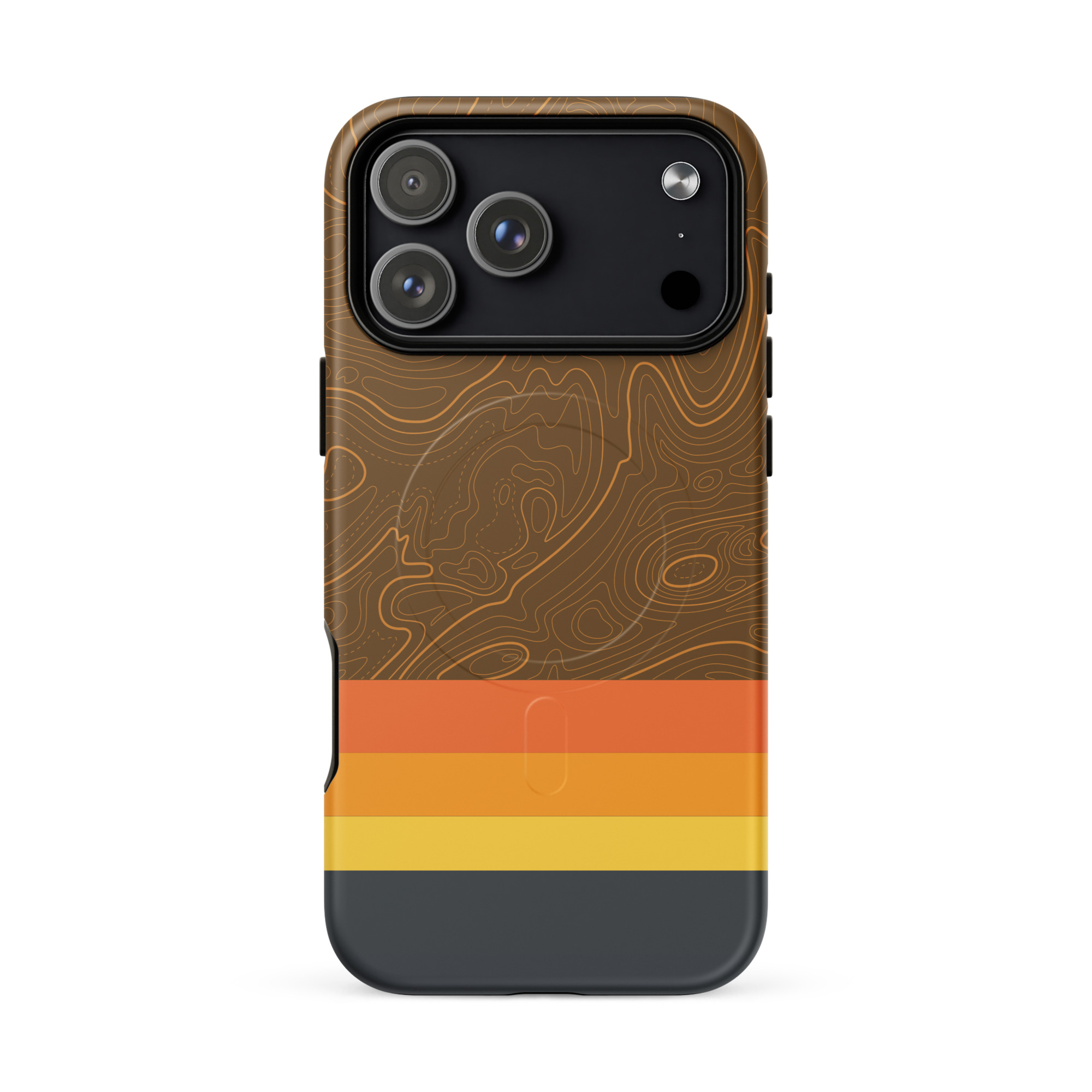
We build small-batch gear for people who go places most phone cases were never designed for. Our Firebrush Camo MagSafe Phone Case was developed specifically with the overlanding use case in mind — not retrofitted from a fashion case line or a generic protective shell.
Firebrush Camo MagSafe Phone Case

Built for the trail. Firebrush camo pattern, MagSafe compatible, drop-tested protection with genuine grip — not the kind that peels off after a season. Made for the people who actually go out there. Shop the Case →
Frequently Asked Questions
Do I need a waterproof case or just water-resistant?
Depends on your route. For most overlanding — including rain, stream splashes, and damp camp conditions — a water-resistant case rated IP64 or higher handles it. If you’re doing water crossings where the phone could go fully submerged, you want IP68 waterproofing. Know your route before you buy.
Will a thick protective case interfere with MagSafe charging?
It can. Look for cases that explicitly confirm full-speed MagSafe charging. The key is proper magnet alignment and charging coil placement inside the case — a well-designed thick case handles this; a cheap one doesn’t.
What’s the difference between MIL-STD-810H and MIL-STD-810G?
810H is the more recent standard (updated in 2019) and includes more rigorous testing for drop height, vibration profiles, and temperature cycling. Both are legitimate certifications — 810H is simply more comprehensive. Either is a meaningful indicator of real-world protection.
Can I use a rugged case with RAM or Quad Lock mounts?
Yes, with caveats. RAM’s X-Grip mounts are universal and work with most cases regardless of thickness. Quad Lock requires their specific case or adapter. MagSafe-based mounts need a MagSafe-compatible case. Check mount compatibility before committing to a case, especially if you run a specific mount system.
How often should I replace my phone case?
Most quality cases start showing degradation after 12–18 months of hard use — UV exposure breaks down TPU over time, port cover seals fatigue, and the structural integrity of the case can be compromised by repeated drops even when the phone survived. If the case is visibly warped, cracked, or the port covers no longer seat firmly, replace it before the next big trip.
Is a camo phone case just a style choice?
Mostly style, but not entirely. At dispersed campsites and busy trailheads, a low-profile case makes your phone less visible. Earth tones also don’t catch light the way glossy black cases do — a small thing, but when you’re photographing or glassing terrain, reflective gear is annoying. If you’re going to have a case anyway, it might as well not announce your phone across the camp.
Bottom Line
Your phone is doing serious work out there. It deserves a case built to the same standard as the rest of your kit. The basics are non-negotiable: genuine drop protection, a grip that holds in wet or cold conditions, dust-sealed ports, and compatibility with however you’re mounting it in your rig.
Beyond the basics, the choice comes down to your specific route and setup. More water, more waterproofing. MagSafe dash mount, MagSafe-compatible case. Camo or earth tones if you’d rather blend than broadcast.
Whatever you choose, test it before you need it. The trail is not the place to discover a gap in your gear.