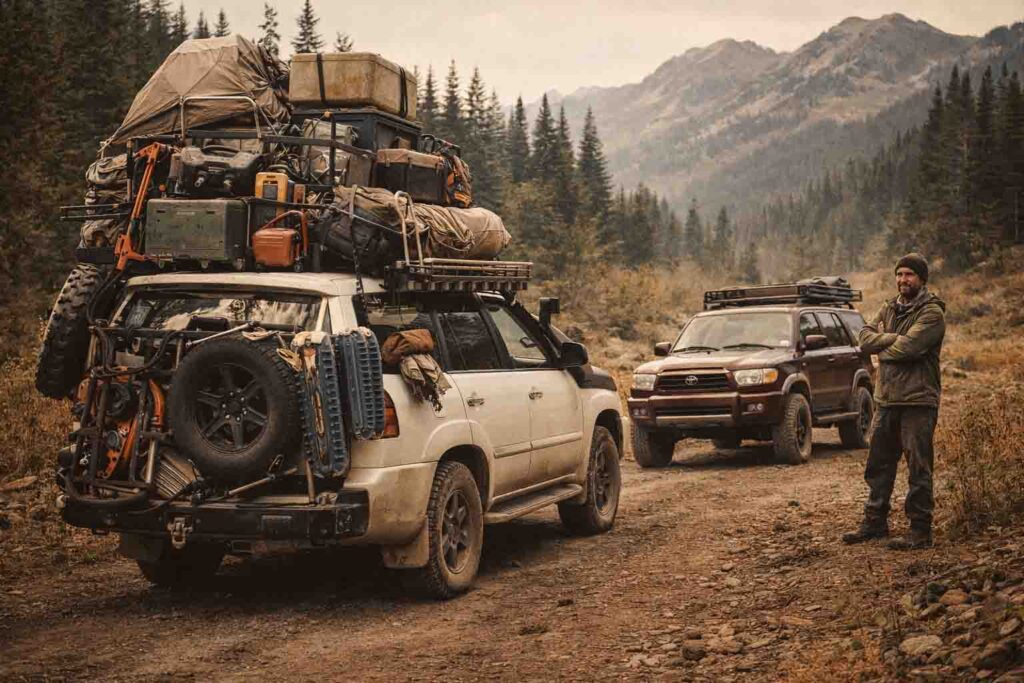
Overlanding is not about bolting $12,000 worth of aluminum to your vehicle and driving to Starbucks. It’s about self-reliant travel. Dirt roads. Remote camps. Figuring it out as you go.
If you’re searching for overlanding for beginners, how to start overlanding, or what gear do I need to overland, this is your grounded, slightly snarky field guide.
Let’s build capability before catalog addiction.
What Is Overlanding, Really?
Overlanding is vehicle-based exploration where the journey matters more than the destination. You travel off pavement, camp along the way, and rely mostly on what you brought.
It is not:
- A rooftop tent fashion show
- A rolling REI receipt
- A light bar visible from space
It is:
- Planning
- Navigation
- Self recovery
- Respect for land
- Simple camp systems
If you can drive down a forest road, cook dinner, sleep comfortably, and leave no trace, you are already overlanding.
Step 1: Start With the Vehicle You Already Own
Before you Google “best overland build,” breathe.
You do not need a brand new Tacoma on 35s with a snorkel unless you are actually crossing rivers deep enough to require one.
Common beginner platforms:
- Mid-size trucks
- SUVs
- AWD crossovers
- Even a well-maintained Subaru
A stock vehicle with good tires beats a heavily modified vehicle with no skill.
Tires > Everything Else
If you upgrade one thing, upgrade your tires.
All terrain tires:
- Better traction
- Stronger sidewalls
- More confidence on gravel and dirt
You don’t need mud terrains unless you live in clay soup.
The Beginner Gear You Actually Need
This is the short list. Notice what’s not on it.
Recovery Basics
- Full size spare
- Tire repair kit
- Air compressor
- Recovery boards
- Tow strap
If you can’t self recover, you’re just camping farther from AAA.
Navigation
- Offline maps
- Paper maps
- Compass
Apps are great until they aren’t.
Camping Setup
- Reliable tent or sleep system
- Sleeping bag rated for your temps
- Simple camp stove
- Water storage
- Headlamp
You don’t need a $4,000 drawer system to hold socks.
Safety
- First aid kit
- Fire extinguisher
- Communication device (satellite preferred in remote areas)
Confidence comes from redundancy.
Avoid Becoming a Pavement Princess 👑
Let’s talk about it.
A pavement princess is a rig built for Instagram that rarely sees actual dirt.
Common symptoms:
- Pristine traction boards with no scratches
- Maxed-out suspension that never articulates
- Every possible accessory mounted “just in case”
- Zero recovery practice
Accessories are tools. Tools without skill are decorations.
Before buying:
- Have you been stuck before?
- Have you maxed out your current setup?
- Are you solving a real problem or imaginary future drama?
Upgrade based on experience, not anxiety.
Practice Before You Go Big
Start small.
Day trip on forest roads.
Camp one night locally.
Test your setup close to home.
Places like:
- Death Valley National Park
- Mojave National Preserve
- Ocala National Forest
offer beginner friendly routes mixed with challenge.
Build competence gradually.
Overlanding Skills > Overlanding Gear
Learn:
- How to air down tires
- How to read terrain
- How to use recovery boards
- How to change a tire in mud
- How to pack efficiently
- How to cook without setting the forest on fire
Skill weighs nothing and costs little.
Budget Overlanding Is Real
You can start overlanding for:
- Cost of tires
- Basic recovery kit
- Camp gear you may already own
You do not need:
- Dual battery system for a weekend trip
- Onboard shower unless you’re allergic to being human
- Starlink for checking email in the woods
Minimal builds are often the most reliable.
Common Beginner Mistakes
Overpacking
You don’t need three axes.
Underestimating Weather
Desert nights freeze. Mountains surprise you.
Ignoring Vehicle Maintenance
Fresh fluids > fresh decals.
Not Practicing Recovery
Don’t learn winching during a thunderstorm.
Respect the Land
Overlanding survives because public lands survive.
Follow:
- Tread lightly principles
- Stay on designated routes
- Pack out everything
- Don’t build illegal fire rings
- Leave camps better than you found them
If trails close, we all lose.
The First Overlanding Trip Plan
Keep it simple:
- Pick a known route
- Download offline maps
- Share trip plan
- Pack essentials
- Fuel up
- Air down when appropriate
- Camp
- Reflect on what you actually used
Then upgrade based on experience.
Frequently Asked Questions
What is the best vehicle for beginner overlanding?
The one you already own that’s mechanically sound.
Do I need a rooftop tent?
No. Ground tents work perfectly.
How much does it cost to start overlanding?
You can start under $1,000 if you already have camping gear.
Is overlanding dangerous?
Only if you treat it like a shopping hobby instead of a skill based activity.
Final Thoughts
Overlanding is not about perfection. It’s about capability.
A scratched bumper with stories beats a flawless build with zero dirt under it.
Drive. Camp. Learn. Adjust.
The trail will teach you what you need.
Your bank account doesn’t have to.

Leave a Reply