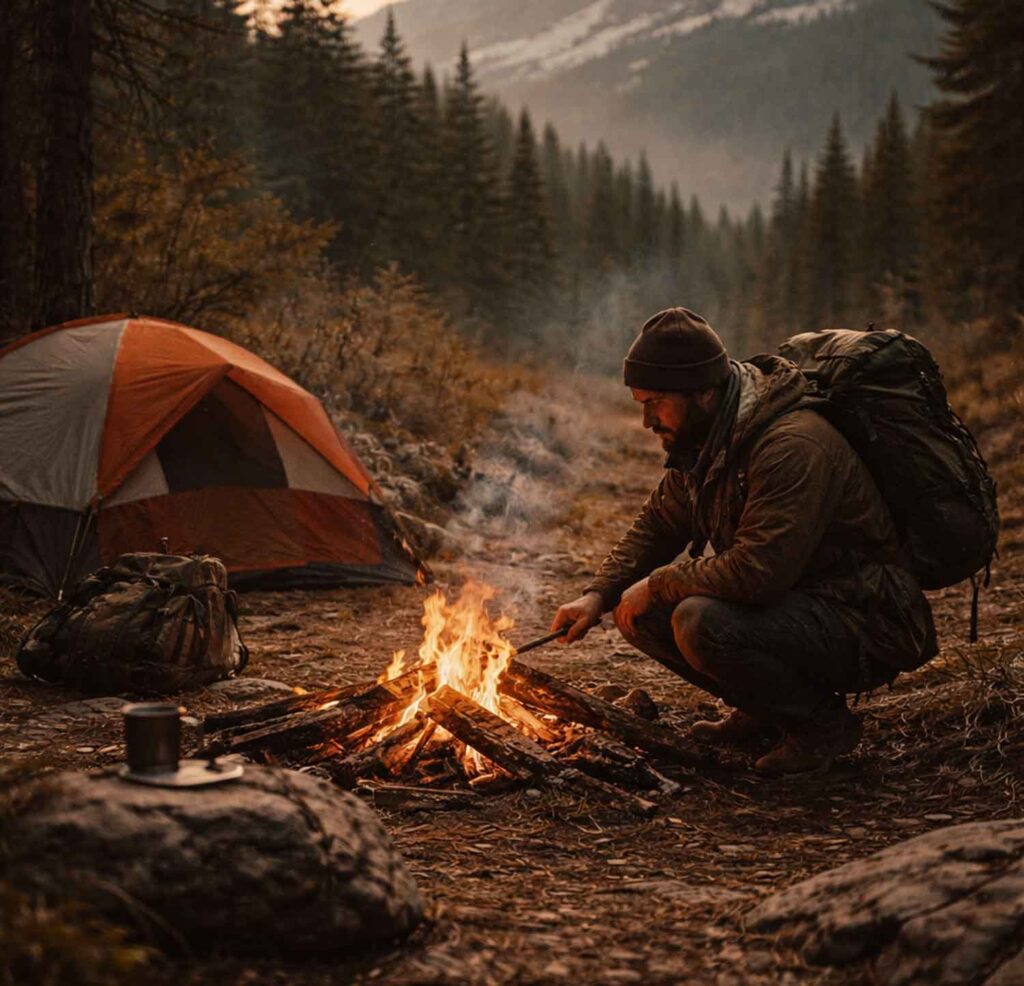
Camping alone is not reckless. It is intentional. It is choosing quiet over chatter, stars over screens, instinct over noise. But solitude demands preparation. When you’re solo, you are the planner, the navigator, the medic, the mechanic, and the decision maker.
This guide covers how to stay safe when camping alone, whether you’re car camping, backpacking, living the van life, or heading deep into overland territory.
If you’re searching for solo camping safety tips, camping alone precautions, or how to safely camp by yourself, you’re in the right place.
Why Solo Camping Safety Matters
Solo camping offers freedom and clarity. It also removes your backup plan. That doesn’t mean fear. It means systems.
The safest solo campers are not the strongest. They are the most prepared.
1. Always Tell Someone Your Plan
Before you leave:
- Share your exact location
- Provide your route and backup route
- Give expected arrival and return times
- Set a check in deadline
If you miss your check in window, they know when to act.
Pro tip: Leave a physical trip plan inside your vehicle in case of emergency search and rescue.
2. Choose the Right Campsite
Not all solitude is smart solitude.
For Car Camping
Choose established campgrounds or dispersed sites with known access roads. Avoid parking in blind curves or low drainage areas.
For Backpacking
Research trail reports, seasonal hazards, water sources, and wildlife activity.
For Van Life
Rotate locations. Avoid overstaying. Trust lighting, visibility, and your instinct.
For Overlanding
Study terrain maps. Know recovery points. Have offline GPS loaded before losing service.
3. Understand Wildlife Safety
Wildlife encounters are rare, but preparation matters.
American black bear
Store food in bear-proof containers or hang properly.
Grizzly bear
Carry bear spray in grizzly territory and know how to deploy it.
Mountain lion
Maintain awareness at dusk and dawn. Make yourself look larger if encountered.
General wildlife safety tips:
- Never cook inside your sleeping area
- Keep camps clean
- Store scented items properly
- Avoid hiking alone at night in predator-heavy regions
4. Carry Communication Tools
Cell service is unreliable in wilderness areas.
Recommended tools:
- Satellite communicator
- Personal locator beacon
- Offline maps downloaded
- Backup battery packs
- Paper maps and compass
A $300 satellite device costs less than a helicopter rescue.
5. Trust Your Gut
If something feels off, it probably is.
Leave. Relocate. Pack up in the dark if necessary. Pride is not worth risk.
Your intuition is a survival system, not paranoia.
6. Secure Your Camp at Night
Whether tent camping or van dwelling:
- Keep keys within reach
- Lock doors
- Store tools out of sight
- Use subtle lighting
- Avoid broadcasting your exact location on social media in real time
Low profile equals low attention.
7. Be Weather Ready
Weather shifts fast, especially in places like:
- Rocky Mountain National Park
- Mount Rainier National Park
- Big Bend National Park
Check forecasts before departure and during your trip.
Bring:
- Proper insulation layers
- Rain gear
- Extra water
- Emergency shelter
- Fire starting tools
Hypothermia and dehydration are more common than dramatic wildlife encounters.
8. Vehicle Preparedness for Solo Overlanding & Car Camping
If your vehicle fails, your shelter fails.
Carry:
- Full size spare tire
- Tire repair kit
- Recovery boards
- Basic tools
- Jumper cables or jump starter
- Extra fuel when appropriate
- First aid kit
Know how to use every piece of gear before you need it.
9. Self Defense Considerations
Know local laws before traveling across state lines.
Non lethal options:
- Bear spray
- Whistle
- Flashlight with strobe
- Personal alarm
Most solo campers never experience human threats. Awareness and positioning prevent most problems.
10. Mental Preparedness
Camping alone amplifies sound and imagination.
Branches snap louder. Wind sounds intentional. Coyotes hold meetings at 2 AM.
Prepare mentally by:
- Understanding local wildlife sounds
- Practicing solo outings before remote trips
- Keeping a headlamp handy
- Having structured routines
Confidence grows with repetition.
Solo Camping Safety Checklist
Before Departure:
- Trip plan shared
- Weather checked
- Maps downloaded
- Gear tested
- Vehicle inspected
At Camp:
- Food secured
- Perimeter awareness
- Communication device charged
- Keys accessible
- Exit plan identified
Frequently Asked Questions
Is it safe to camp alone as a beginner?
Yes, start with established campgrounds before remote backcountry trips.
Is solo camping safe for women?
Yes, with preparation, awareness, and proper planning. Many women safely solo camp, backpack, and overland across the country every year.
What is the biggest risk when camping alone?
Weather exposure and navigation errors are statistically more common than wildlife or crime issues.
Final Thoughts on Camping Alone Safely
Camping alone is not about isolation. It is about self reliance. You build competence one trip at a time.
Preparation is the difference between anxiety and peace.
Whether you’re car camping outside town, backpacking deep into the backcountry, living the van life between trailheads, or overlanding miles from pavement, the rules are the same:
Plan well. Stay aware. Respect the land. Trust your instincts.
The wilderness does not demand perfection. It demands presence.
And when you are present, prepared, and capable, solo camping becomes one of the most empowering experiences you can have.

Leave a Reply